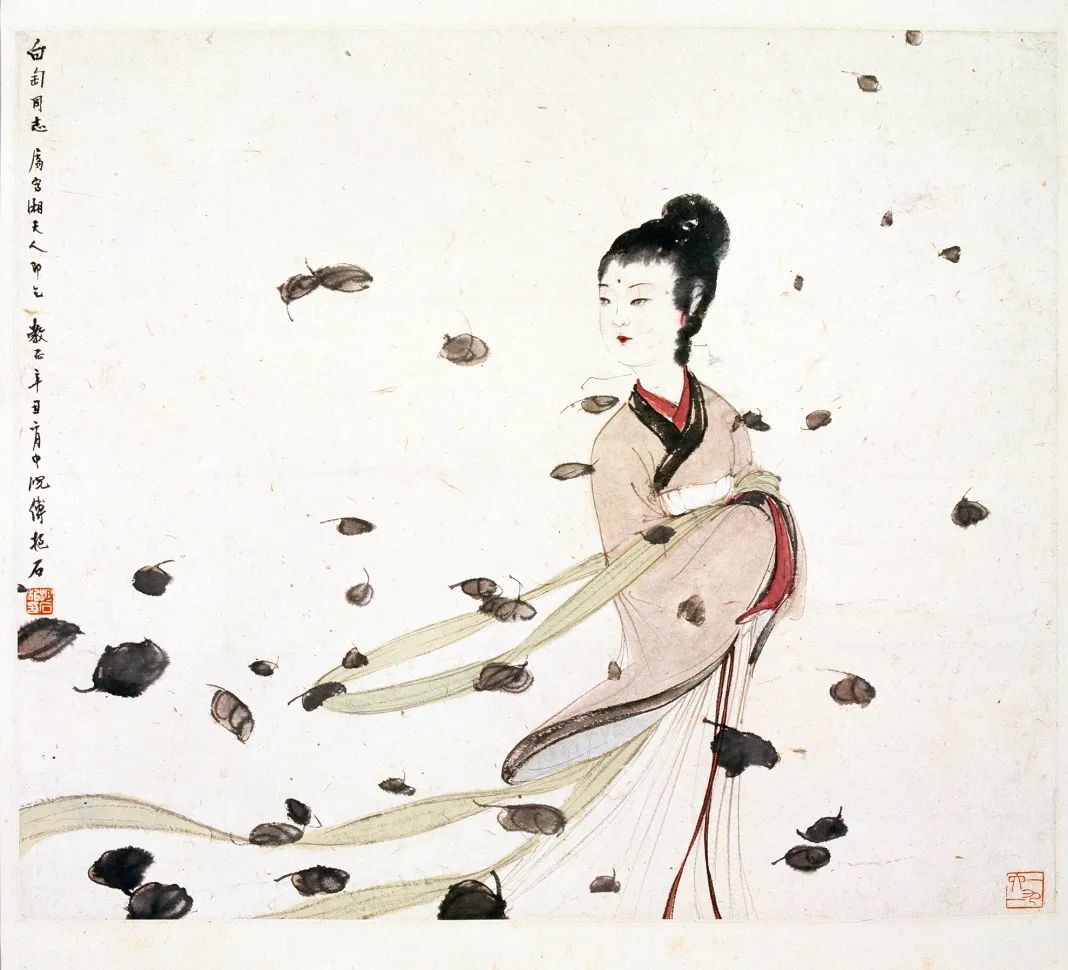
Fu Baoshi
Introduction
Fu Baoshi (1904-1965) was one of the most notable Chinese artists of the 20th century, renowned for his unique contribution to traditional Chinese ink painting. His work is celebrated for its integration of classic Chinese literature and modern themes, which brought a new dimension to the traditional shanshui (mountain-and-water) style. Fu's ability to blend poetry, philosophy, and painting into a singular aesthetic experience distinguishes him as a master of his craft. His influence continues to resonate, with numerous exhibits and auctions highlighting the enduring relevance and value of his artwork.
Early Life and Education
Fu Baoshi was born in 1904 in Xinyu, Jiangxi province, China. His early life was marked by a profound interest in Chinese literature and art, which laid the foundation for his future career. Fu initially pursued the study of painting in his home province before advancing his education in Japan. In Japan, he studied at the Tokyo School of Fine Arts, where he was exposed to Western art techniques and theories, which later informed his innovative approach to Chinese painting. This blend of Eastern and Western influences would become a hallmark of his artistic style. Upon returning to China, Fu continued to refine his skills, drawing inspiration from China's rich cultural heritage and his own lived experiences.
Artistic Career
Development of Style
Fu Baoshi's artistic journey is characterized by a continuous evolution of style, reflecting his deep engagement with both traditional Chinese culture and contemporary societal changes. He is best known for revitalizing the shanshui genre, infusing it with a modern sensibility that echoed the transformations of 20th-century China. His work often depicted grand landscapes and historical scenes, integrating elements of classical poetry and modern political themes. Fu's innovative techniques involved bold brushstrokes and a masterful use of ink and color, capturing the essence and spirit of the landscapes he painted. His travels across China further enriched his repertoire, enabling him to depict the country's diverse sceneries with authenticity and emotion.
Major Works
Among Fu Baoshi's most acclaimed works are The Song of the Pipa Player and Magnificent View of Maoshan Mountain. The Song of the Pipa Player is based on a narrative poem by Bai Juyi from the Tang Dynasty (618-907), demonstrating Fu's skill in rendering literary themes through visual art. Magnificent View of Maoshan Mountain, completed shortly before Fu's death, is another significant piece that exemplifies his ability to merge traditional styles with contemporary themes, celebrating both natural beauty and socialist construction.
Influence and Legacy
Fu Baoshi's influence extends beyond his lifetime, shaping the direction of modern Chinese art. He played a pivotal role in the New Jinling School of painting, which sought to modernize traditional Chinese art forms to reflect the rapidly changing society of the time. Fu's integration of classical elements with new artistic expressions paved the way for future generations of artists, encouraging them to explore innovative approaches within the framework of traditional Chinese aesthetics. His legacy is perpetuated through numerous exhibitions, auctions, and scholarly studies, emphasizing his enduring impact on Chinese cultural heritage.
Personal Life
Fu Baoshi's personal life was closely intertwined with his artistic pursuits. He was deeply committed to his craft, often traveling extensively to gather inspiration and explore new techniques. Despite the challenges of his time, including political upheaval and social changes, Fu remained focused on his artistic vision. His dedication to art was also reflected in his collaborative efforts, such as his work with Guan Shanyuan on the painting Jiangshan Ruci Duojiao, which combined themes of natural beauty and national pride. Fu's personal experiences and interactions with other artists and intellectuals enriched his work, providing a nuanced understanding of the cultural and social dynamics of his era.
Influence on Modern Art
Fu Baoshi's influence on modern art is profound, particularly in the realm of Chinese ink painting. His innovative approach to the traditional shanshui style has inspired countless artists to explore new methods of expression within the framework of Chinese cultural traditions. By merging classical themes with modern sensibilities, Fu opened new avenues for artistic exploration and cultural dialogue. His work continues to inspire artists who seek to balance tradition with innovation, making Fu Baoshi not only a pivotal figure in Chinese art history but also a bridge between past and future artistic expressions. His legacy is reflected in the works of contemporary artists who draw upon his techniques and thematic approaches to create art that resonates with modern audiences.








